Sentiment Engineering in the AI era

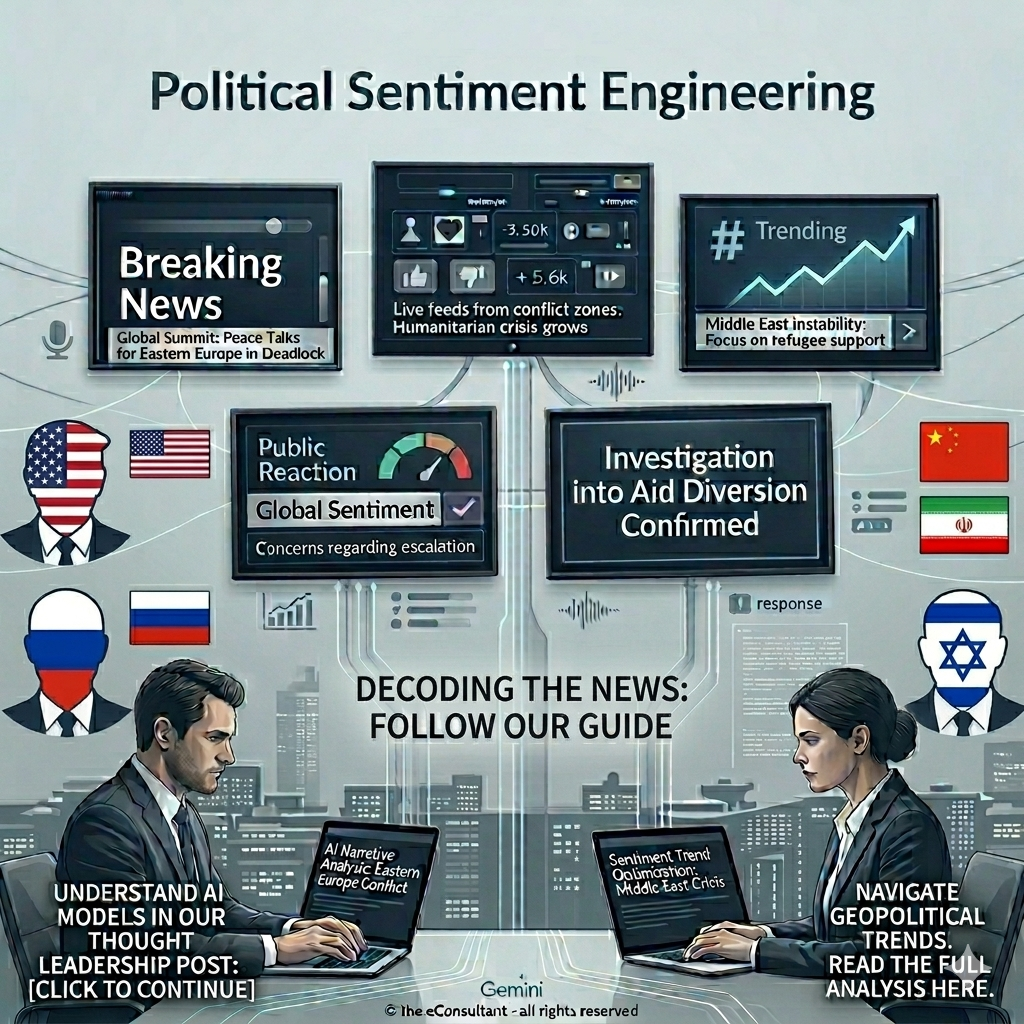
WHEN a major speech is given during a conflict, it doesn’t just reach the public once (think about Melania Trump and relationships with Epstein).

It’s translated, clipped, tested, reframed and redistributed within minutes – across TV, social platforms and global news cycles.

AI sentiment engineering and manipulation (by politicians and commercial lobbying interests)

AI sentiment engineering – or are we being manipulated?

In conflicts like Ukraine and the Middle East, as well as across recent elections, AI is already part of that process:

  • Supporting how messaging is analysed, adapted, and scaled in real time.

This reflects a wider shift. Political communication is no longer just about what is said. It’s about how messaging performs… attention, reaction and reach:

  • Language is tested before release
  • Public response is tracked continuously
  • Narratives are repeated and reinforced across platforms

What’s changing now?

AI systems learn from these same patterns. They don’t independently verify truth; they reproduce what is most consistent, visible and widely represented.

Why it matters

In a 24/7 media environment, influence is no longer only downstream (how people react). It is increasingly upstream, shaped during creation, testing and distribution. Shaped by whom? Think political parties and commercial lobbying, for example.

The result isn’t necessarily false information; it’s information that has been optimised to perform.

Practical question

How should media literacy evolve when what we see is not just reported – but engineered to scale, possibly engineered to lobby (or manipulate, if someone is machiavellian).

#AI #DigitalTransformation #Media #Politics #PR #InformationIntegrity

Interested in the research behind this? Comment “sources” and I’ll share.

Posted in Economics, Leadership | Leave a comment

How AI Delivers – and Where Leaders Should Pay Attention

WHEN a BBC dragon targets a blunt “get a grip” message to the legal sector and also to working people who are already uncertain about the benefits of AI, you prick up your ears.

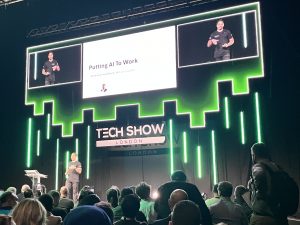
Piers Linney made the controversial-sounding statement on the main stage at Tech Show London 2026.

The remark drew attention – but it reflects a broader mood across the technology sector.

How to put AI to Work - by Mark Chapman, the-eConsultant - at Tech Show London

How to put AI to Work – by Mark Chapman, the-eConsultant – at Tech Show London

It was reminiscent of Elon Musk who made (public relations) headlines wielding a chainsaw to announce plans to cut US government staffing. This came after his widely trumpeted cuts at Twitter – presumably AI-led.

Such stage-managed impatience is a clear, aggressive, shout-out to organisations: speed matters.

The reality for organisations, however, is subtler. Fast is not enough – it must be meaningful !

At the operational frontier, AI can handle much of the heavy lifting:

  • Automating knowledge work
  • Processing large datasets
  • Reactivating dormant revenue opportunities.

Some estimates suggest AI can already handle a significant portion of routine knowledge work – but only when deployed carefully and with human oversight, i.e. legal work, other high-volume documentation.

Mistakes, however, are real + costly. Energy consumption is rising, untested applications can be dangerous – and even basics such as accuracy, or truthfulness – is a major issue; just ask anyone who’s used ChatGPT over a reasonable length of time.

So, let’s slow this down.

For leaders, the rules are simple:

  • Deploy AI where it works and produces ROI.
  • Keep humans involved to mitigate risk.
  • Understand the full cost, including environmental and reputational impact.
  • Don’t adopt AI just to follow the crowd; focus on outcomes for customers and staff.

Businesses that navigate this effectively combine agile structures, clear priorities – and human insight.

Appropriately managed digital transformation helps organisations do this efficiently, lowering overheads and other costs while keeping teams capable and engaged.

Large organisations and VC-backed ventures often carry high overheads and complex layers, which inflate costs and slow execution.

For boards and investors, the challenge is not whether AI will reshape organisations, but how to capture its benefits without adding unnecessary cost, risk – or complexity.

My experience in digital transformation and marketing allows identification of where AI and process improvements deliver real impact and streamline operations while preserving the human knowledge and creativity that machines cannot replace.

‘This combination is what makes ‘the eConsultant’ a strong contributor at executive level – with a track record helping organisations move quickly, stay lean, and ensure technology works for people – not just metrics’

The real question for leaders is where AI genuinely adds value – and where it doesn’t … 

Posted in Change, Leadership | Leave a comment

Tech Show London – Five themes shaping 2026

Notes from Tech Show London …

Events like this are a useful way to take the temperature of the technology industry.

Themes shaping the agenda into 2026 are broadly the same ones that drove 2025:

• AI moving from experimentation into operational use
• data platforms becoming the foundation for making AI useful
• cloud infrastructure expanding to support AI-scale workloads
• cybersecurity shifting into a resilience and governance issue
• trust and accountability starting to sit alongside capability

What feels different this year is the focus of the conversation.

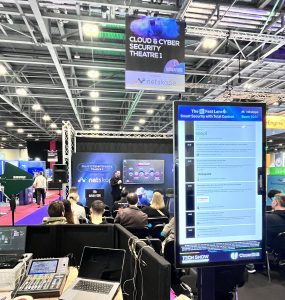
Techshow-London-2026

On the floor ‘live’ from Tech Show London

The technology is no longer the main question. Most organisations are already experimenting with it.

The real challenge is organisational – how companies adapt workflows, decision-making and leadership so these tools actually deliver results.

Technology adoption is rarely the difficult part. Aligning people, incentives and communication around real outcomes usually is.

That’s where digital transformation actually happens – how organisations change the way they work?

Posted in Change, Leadership | Leave a comment

The Consent Crisis in the Age of Tech + AI Wearables

META’s AI glasses are dominating headlines following a series of alarming reports, most notably from BBC News and regional investigators, detailing a surge in incidents of recording by stealth.

AI Glasses

Stealth Surveillance Trap: AI Wearables – Public Safety for Women + Professional Ethics

Marketed as a breakthrough in corporate productivity, the technology is increasingly under fire for its impact on public safety and personal boundaries:

  • Violations of Public Consent: Today’s coverage highlights a disturbing trend of women being targeted by males using the glasses for non-consensual filming in public spaces, gyms, and transport hubs (including a TikTok video made in Brighton).

  • The ‘Chat-Up Artist’ Controversy: Investigative reports have surfaced POV-style content creators who use discreet hardware to record and broadcast social interactions without the subject’s knowledge, claiming the device’s hidden nature is essential for their surprise content.

  • Breakdown of Safeguards: Despite Meta’s mandatory recording LED, privacy advocates and the BBC demonstrated the light is often ignored, misunderstood, or intentionally obscured, leaving females feeling “violated” and hyper-vigilant in everyday situations.

In response to this escalating problem, consider drawing up a code of conduct to establish clear boundaries for responsible use of AI wearables. Does the sample one below I’ve written support your thinking? If so, then next issues could be: how effective is your code – and how to enforce it?


Ethical Use & Privacy Guide: AI Smart Glasses

  • Explicit Verbal Consent: Always announce your intention before recording or live-streaming in social or professional groups.

  • “Power-Down” Rights: Manually turn off the device when entering private or sensitive areas, such as restrooms, locker rooms, doctors’ offices,or private homes.

  • Respect the Opt-Out: If a colleague or bystander expresses discomfort, cease recording immediately without debate.

  • Maintain Visual Cues: Never mask or disable the recording LED; ensure the light is clearly visible to those around you.

  • Transparency in Meetings: State clearly if you are using AI glasses for transcription or note-taking.

  • Protect Intellectual Property: Avoid wearing active AI glasses near confidential whiteboards, prototypes or secure computer screens where OCR (text-scanning) could leak sensitive data.

  • Zero-Surveillance Culture: Using glasses for stealth monitoring of peers or subordinates is a breach of workplace ethics, personal rights, security – as well as potentially severe legalities.

Posted in Uncategorized | Leave a comment

Corporate Profit vs the Mental Health Cost

TODAY marks World Mental Health Day, prompting a necessary examination of the often felt unsustainable demands of the corporate world and the urgent need to curb these practices for the sake of collective well-being.

Below is a reasonable, factual summary of a significant problem. Feel free to pass this article around. Why not add your comments, quick brainstorm or even a simple idea (just one) for progressive change.

The System is Cracking Under The Strain

With financial burdens and societal costs having to be absorbed by individuals and public services, people are gradually realising that the promise of ‘work hard and you’ll be rewarded’ is often a lie. The reward for constant sacrifice is often just more work, followed by burnout, illness or redundancy (especially when you are no longer operating at 100%).

the-work-hard financial-system-is-collapsing_a-picture-speaks-a-thousand-words

a picture of someone thinking, solving, speaks a thousand words

The lived experience of millions is the system – as it’s currently configured by many large employers and incentivised by government policy – does not have sufficient mechanisms or motivation to protect its people.

The Financial vs. Human Cost: A recent UK study revealed that poor mental health in the workplace costs the economy approximately £28 billion annually. This staggering figure is primarily driven by factors such as employee burnout, absenteeism and lost productivity.


Critically, these costs are typically absorbed by the affected individuals and the public health services, rather than being borne directly by the companies whose aggressive practices contributed to the problem.

Shareholder Primacy: The legal obligation of a publicly traded company is, first and foremost, to its shareholders. While some companies recognise the long-term benefits of a healthy workforce, this corporate responsibility is often sidelined when it conflicts with short-term profit goals or quarterly earnings targets. This dynamic leads to prioritising business decisions that maximise returns over employee welfare.

‘Battles’ for Sustainable Culture: Creating a truly sustainable and humane workplace culture often demands that companies invest in resources that do not yield immediate financial returns. Such investments should include:

  • Limiting workloads and working hours
  • Providing genuine support for mental health, moving beyond tokenistic gestures
  • Prioritising work-life balance for all employees
  • Moving away from aggressive, competitive workplace norms

Shifting Tides: Resistance to Change

The tide is slowly beginning to turn, driven by several key factors. However, progress remains sluggish and is frequently met with internal resistance, cementing the feeling that cultural change is a constant battle.

Legal Responsibility: In many jurisdictions, including the UK, employers have a legal ‘duty of care’ to ensure the health, safety, and well-being of their employees. This obligation now formally extends to mental health, leading to a rise in mental health-related employment tribunal claims.

Rising Economic Cost: As the statistics demonstrate, the economic burden of burnout and poor mental health is substantial, forcing some companies to finally recognise that neglecting employee well-being directly impacts their bottom line.

Shifting Employee Priorities: Employees, particularly younger generations, are increasingly prioritising well-being and demonstrating a greater willingness to leave companies with toxic workplace cultures. This evolving landscape grants employees new leverage to demand systemic change from employers.

Such research and observations strike a crucial chord: the idea that corporate practices, often driven solely by shareholder interests, can severely impact individual and societal mental health. The constant pressure to meet demanding targets and boost profits frequently fosters work environments that neglect employee well-being, ultimately externalising the cost of that neglect onto employees and the public healthcare system.

These battles are undoubtedly exhausting, yet they are the essential engine driving societal shifts. The very act of questioning the current system and pushing for greater corporate responsibility forms a critical part of the process towards a more sustainable and humane working future.


The World Health Organization (WHO) highlights the theme of ‘Mental health as a universal human right’ for its World Mental Health Day campaign.

Read the AXA UK / CEBR report: The UK is “running on empty”, as far as productivity is concerned and ‘state of the nation’ > https://lnkd.in/eFunj9yS

Posted in Uncategorized | Leave a comment

UK Eyes Billions in Gambling Taxes to Fund Social Spending

GAMBLING made news headlines this week when Chancellor Rachel Reeves signalled she is studying this industry to help the Labour government improve UK tax revenues.

Global turnover from this entertainment sector is larger than many industries combined, including gaming, film and music industries. ????

Betting is growing fast as people risk fortunes to chance making a fortune. In 2023, the market was worth nearly £434.6 billion ($540.3 billion). Experts believe it will keep growing. By 2030, it could reach £747.5 billion ($1 trillion).

For comparison, the entire gambling business in Great Britain was worth £15.6 billion between April 2023 and March 2024. This shows just how big the global market is.

Here’s a closer look at the numbers:

  • Lotteries make up the biggest part with more than half of the market
  • Most bets were placed in person at offline locations
  • Gambling fans drove more than half of all spending
  • Geographically, Asia-Pacific led the market with a 32.4% share, followed by North America and Western Europe

These figures highlight the massive economic footprint of the gambling sector and its continued rapid growth. What are your thoughts on these trends?

#GamblingIndustry #MarketAnalysis #BusinessGrowth #Economy #IndustryTrends #Finance

Posted in Uncategorized | Leave a comment

Where Workplace Stress is Killing Your Business Results

Smart people are hired by companies and organisations – but time is likely being wasted on daily confusion and unnecessary ‘stuff’ rather than on customers. Part of the real cost of a stressed workplace isn’t just low morale – it’s lost revenue and wasted marketing spend… public and private sector.

Pressure at work

Have you thought: chaos in the office leads directly to confusion in marketing messages. Constant pressures deplete emotional and mental bandwidth. This people or organisation-led problem is the single biggest block to great work.

Change the environment

When workers lack capacity to focus, creative output quality is bound to suffer. Better results can come from a calmer, clearer environment. Recognising can be the start of solving the hidden, energy-wasting dynamic.

I am happy to discuss how to trade stress and confusion for clarity and better-run marketing and projects when you can escape some pressures for a few minutes.

Posted in Uncategorized | Leave a comment

Prioritise eCommerce to survive in digital economy

AS THE New Year of 2022 approaches, now is the time to reflect how your business or organisation can survive in an advancing dgital and data era.

As with human health, it is likely you face a fitness battle, a need to shape up technologically else commercial survival is a major threat you may struggle to deal with.

Ten key trends savvy businesses must be aligned with to survive in a digital / data-led commercial world that are sustainable (for our home planet, Earth):

  • Applied AI
  • Future of programming
  • Next level process automation and virtualisation
  • Next gen. computing
  • Future of clean technologies
  • Future of connectivity
  • Distributed infrastructure
  • Trust architecture
  • Bio revolution
  • Nano-materials
ecommerce-is-priority-to-stay-in-digital-contention

Prioritise eCommerce to stay competitive in digital, sustainable global economy

#business #data #ecommerce #economy #sustainability

(Based on my executive summary of articles by McKinsey)
Posted in Uncategorized | Leave a comment

How To Be Successful in 2021 with Digital Marketing

WHAT’S your experience of companies doing digital marketing – and recruiting effectively? This is a powerful article about how to do it better; it’s not perfect but it’s a good start. Many businesses should have been doing better before now – but here’s an opportunity to start getting it right.

One of the first things your company should consider is trust and reputation by running a proper onboarding process. Then, having decent understanding about what digital is, knowing what a digital strategy is (and not looking for the ‘silver bullet’ or instant magic results).

Want to build the perfect digital marketing team?

If you want to put together a perfect collection of digital marketers who grow your business to stellar levels, generating pipelines of copious leads, retaining recurring revenue like queues of cars at fuel pumps, then you just scout for the most talented individuals, convince them that you’re exactly where they should be, and bring them on board. After that, it’s just a matter of keeping them happy.

That’s how you’re doing it, or tried to do it?

If it were that simple, every business would be flourishing with a dream team powering their marketing efforts. The truth is however that while not that long ago a single person or two could handle the bulk of the marketing efforts, all that is changing.

You possibly piled everything thing onto one digital goose and expected delivery of expected golden eggs. That though is bad management. No matter how skilled such digital experts are, they don’t have enough arms – or hours in the day – to get everything done…

How to build better digital marketing. Read on …

Posted in Uncategorized | Leave a comment

Changing shopping habits are hurting even the biggest brands…

… and fuelling redevelopment of unloved retail space as gyms and hotels

DIGITAL is still the future … Retail is having to recognise £1 in every £5 spent at shops is online – a figure predicted to rise to 50% within a decade. The property industry’s view is that 30% of UK retail space is obsolete and would better serve communities as hotels and gyms – or, particularly within the M25, as housing. And the sooner it happens the better. Even John Lewis is considering store closures … https://bit.ly/37gwmxi

Posted in Change, Economics, Leadership | Leave a comment